


How to clean a mirror
|
|
Time to read 4 min
 40 x 40 cm
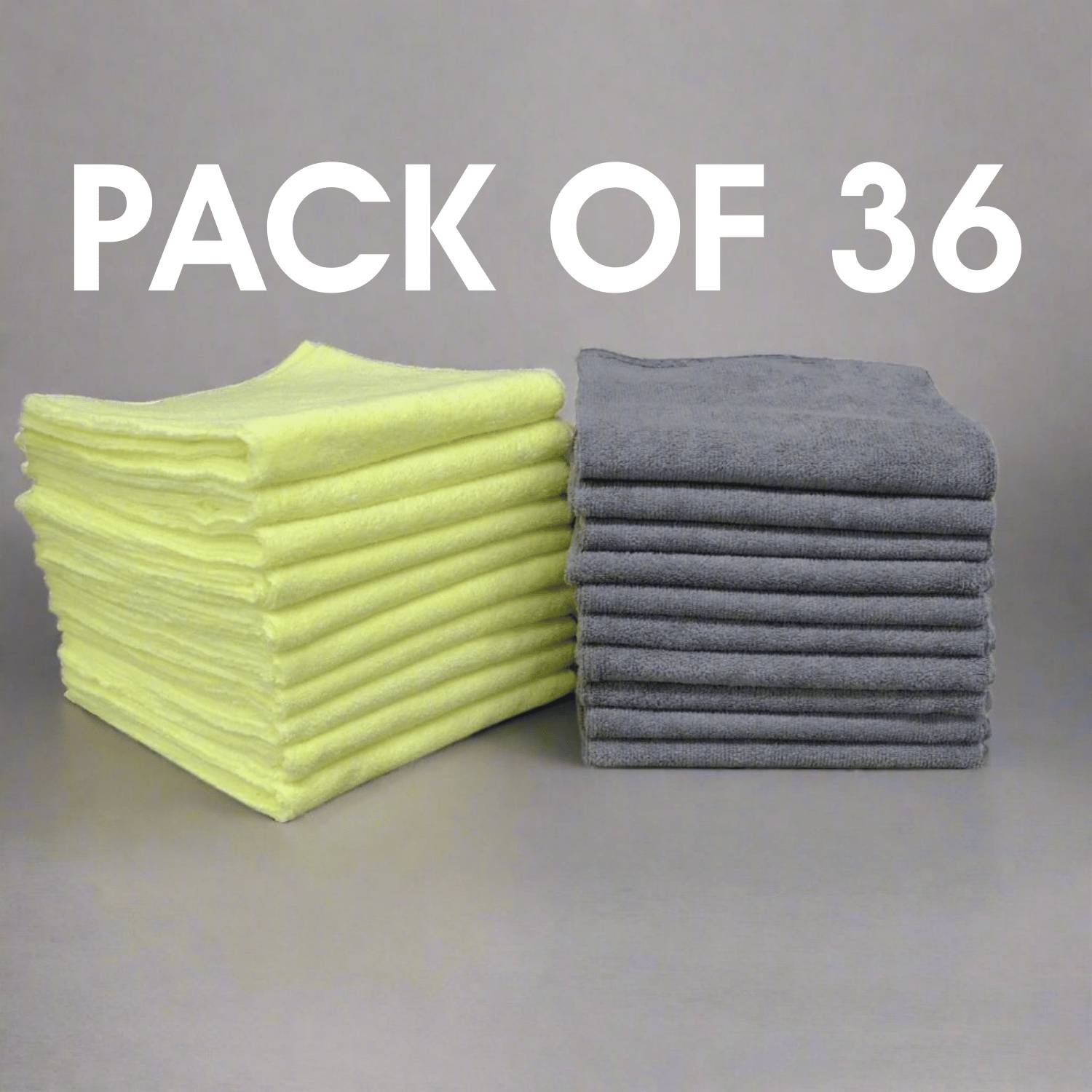
 Pack of 36
 Edgeless
|
|
Time to read 4 min
“Mirror, mirror on the wall, what is the best way to clean you of all?”
Given how often we look at ourselves in the mirror, you’d think we’d all be experts at keeping them streak-free and spotless. That said, while you would think it’s no more challenging than cleaning a piece of glass, achieving a perfectly clean mirror—sans streaks, watermarks, or residue—can be surprisingly tricky without the right tools and technique. From using the wrong type of cloth or overspraying cleaner, small mistakes add up to leave behind smudges, lint, or that frustrating hazy film that shows up when the light hits just right.
In this post, we’ll walk you through the easiest way to keep your home’s mirrors in pristine condition, so they reflect you and your cleaning skills in the best possible light. Say goodbye to streaks—hello to sparkling, crystal-clear reflections.
Compare a mirror to a window, eyeglasses, or a car’s windshield. In all those cases, unlike with mirrors, you’re looking through the glass, not at it. Fingerprints, watermarks, and smudges simply stand out more on a mirror, making them harder to ignore and a distracting eyesore.
While we acknowledge a degree of bias here, there simply isn’t a replacement for a dedicated glass cleaning microfibre cloth. Paper towels and natural-fibre rags are sandpaper compared to microfibre cloths, which also come out on top for absorbency and scratch-free cleaning.
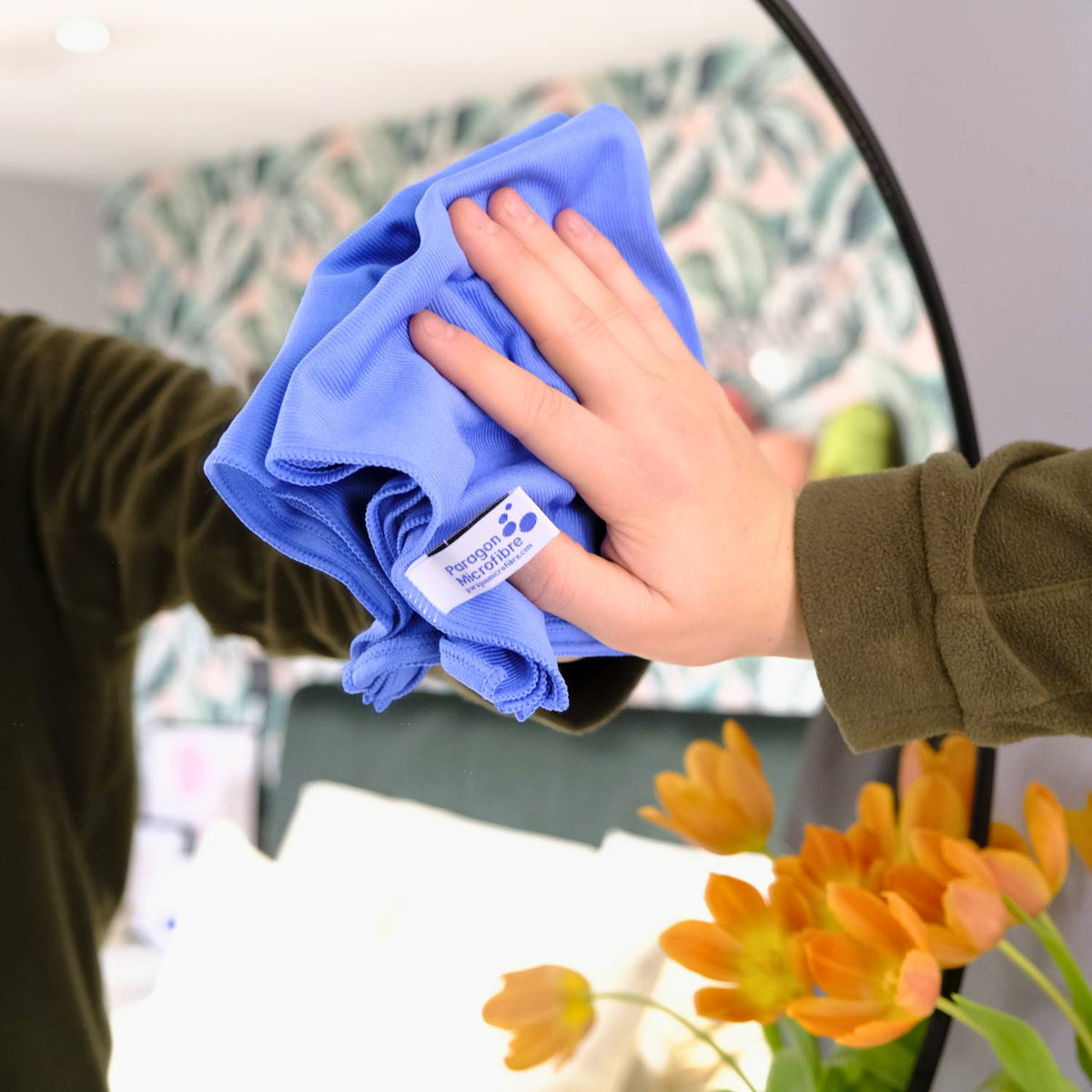
Soft, non-abrasive, and ultra-absorbent, microfibre cloths are ideal for polishing glass without leaving streaks, residue, or lint. Paragon Microfibre recommends keeping a set of two dedicated glass cleaning cloths in your home for mirrors and windows, one for cleaning and one for buffing.
Check out our selection of premium microfibre cloths to make household cleaning a breeze.
Glass or mirror cleaners help to break down smudges and oils for easier and streak-free cleaning. It really is your choice when it comes to going DIY or using a store-bought cleaner such as Windex. For convenience, buy a bottle. For affordability or chemical-free cleaning, mix 1 cup of distilled water with 1 cup of white vinegar and a drop of washing-up liquid to prevent bathroom mirrors from steaming up.
For even coverage without over-saturating the mirror.
Lightly mist your mirror with either a store-bought or homemade glass cleaning solution. It’s important to note that you only need enough cleaner to lightly dampen the surface. Avoid spraying enough cleaner to form droplets that run down the mirror, especially near the edge of the mirror. Too much cleaner may soak your cloth and make a streak-free result harder to achieve.
Using your microfibre cloth, start at the top corner and work your way down in a zig-zag pattern. This helps to ensure even coverage and prevent streaks. Almost all marks and smudges should disappear near instantaneously, and extra stubborn dirt should be easy enough to remove with a bit of vigorous rubbing.
Use your second glass cleaning microfibre cloth to give the mirror a final buff. This removes any remaining moisture and gives the surface a flawless and streak-free shine.
An often overlooked step, viewing your mirror from different angles can help you find any overlooked spots or missed smudges. A quick touch-up with your dry cloth should do the trick.
Use a high-quality microfibre cloth and a light mist of cleaner. Wipe in a top-to-bottom zig-zag motion, then buff with a second dry microfibre cloth for a flawless, streak-free finish.
It’s not recommended. Paper towels often leave lint, streaks, or fine scratches . Microfibre cloths are softer, more absorbent , and specially designed for glass cleaning.
Glass cleaning microfibre cloths typically have a tighter weave and smoother texture to deliver a lint-free, streak-free finish , especially on shiny surfaces like mirrors or windows.
Just a light mist —enough to dampen the surface. Using too much cleaner can oversaturate the cloth, leading to smears and residue .
Often caused by residue from soap, cleaner, or dirty cloths . Use a clean, dry microfibre cloth to buff the mirror. If haze persists, try a vinegar-based cleaner to break it down.
You can, but for the best results, use two cloths : one damp for cleaning and one dry for buffing. This ensures a crystal-clear, streak-free finish .
As the UK’s leaders in supplying high-quality microfibre products for both home and commercial applications, Paragon Microfibre delivers the tools you need for a streak-free clean every time—trusted by professionals and made to last. Our products are ultra-soft, ultra-absorbent, and lint-free for effortless cleaning and flawless results. For microfibre products that consistently deliver as promised, think Paragon Microfibre.


